Codex setup
Track Codex costs
Connect Codex, check its log folder and verify your first upload.
Passcard 0.1.0 source and official Codex setup docs reviewed. A controlled session supplied the recorded example.
You need
A signed-in Codex CLI and Passcard on the same computer. Download a build if your platform is available. Only share usage with a workspace you’re allowed to use.
1. Connect
In Passcard, choose Connect with browser. Sign in, create a workspace if needed, then select and confirm it on Connect this computer.
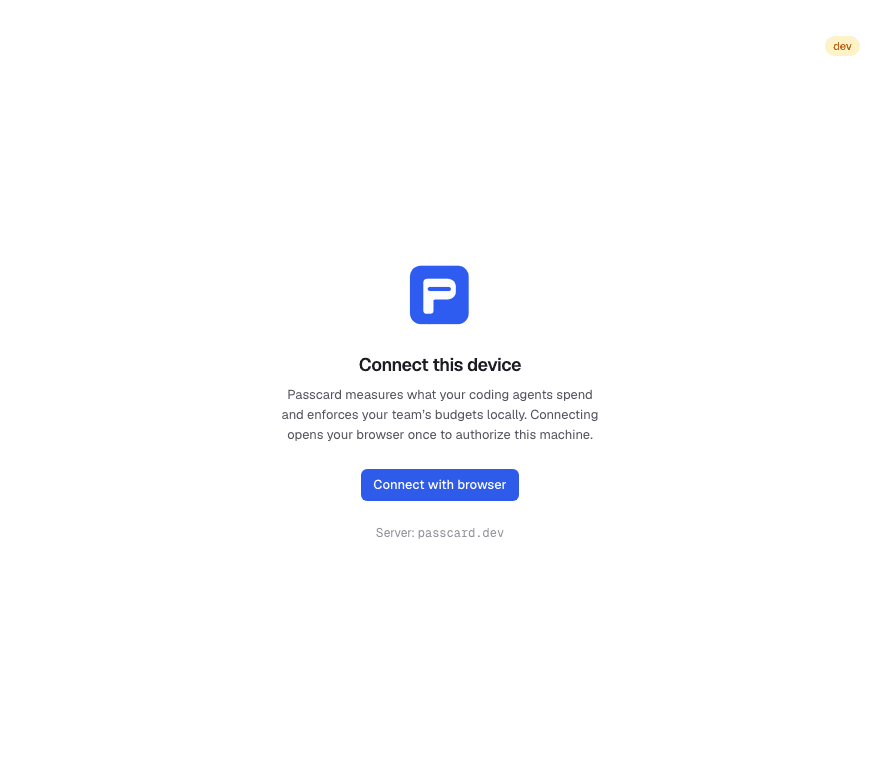
2. Enable log reading
Open Settings → Harnesses → Codex. Enable Read this folder for your agent home, usually ~/.codex. Logs live under sessions/YYYY/MM/DD.
For a custom CODEX_HOME or another profile, choose Add folder, select the home itself, choose Codex, then Add. Terminal variables may not reach desktop apps. Codex home reference. Command history alone is insufficient.
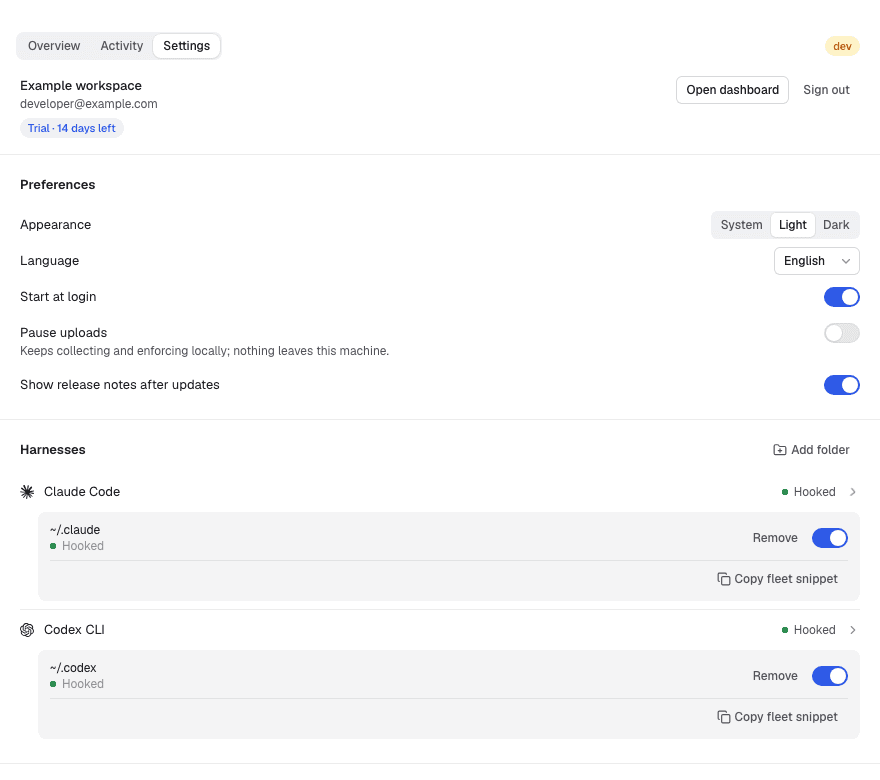
3. Check one session
Complete a short local Codex task. In Passcard, turn off Pause uploads, choose Scan on Overview, and wait for uploads to finish. Resolve any error before choosing Retry.
Optionally, map the repository in the project inbox. See the internal walkthrough.
Reading the cost
Passcard uses per-turn usage, falling back to differences between cumulative totals. Cached input is part of input; reasoning is part of output. Neither is charged twice. Resumed sessions are deduplicated by rollout file and event position.
Costs are calculated from recorded tokens and model API prices. Subscriptions, credits and discounts can change your bill.
Not hooked does not block reading. Optional budget hooks need installation and a running desktop app; delayed logs or concurrent work can exceed a threshold.
Missing usage?
- Expired pairing link: choose Open the link again. Wrong workspace: sign out and reconnect.
- No logs yet: check the home, enable reading and finish a local session. Deleted logs and sessions never saved locally cannot be reconstructed.
- Empty dashboard: check upload errors, workspace, person and dates.
- Different total: compare the same completed session and normalized counts. Check the cost details for missing prices or fallback rates.
Contact support with app/agent versions, OS and error text. Omit raw transcripts, credentials and device tokens. Uploaded metadata excludes prompts and file contents.